Things to Do in Baku
Oil-money skyline, medieval walls, and pomegranates that taste like summer
Top Things to Do in Baku
Find activities and tours you'll actually want to do. Book through our partners -- no booking fees.


Plan Your Trip
Essential guides for timing and budgeting
Climate Guide
Best times to visit based on weather and events
View guide →Day Trips
The best excursions and nearby destinations worth the journey
Explore day trips →Where to Stay
Best neighbourhoods, hotel picks, and booking tips
Find hotels →Travel Insurance
What's required, what coverage matters, and how to get a quote
Read guide →What to Pack
Climate-specific gear, essentials, and what to leave at home
See packing list →When Should You Visit Baku?
Tap a month for weather, crowds, and highlights
View full year-round climate guide →Explore Baku
Ateshgah Fire Temple
Landmark
Azerbaijan Carpet Museum
Landmark

Baku Boulevard
Landmark
Bibi Heybat Mosque
Landmark

Flame Towers
Landmark

Fountains Square
Landmark
Gobustan National Park
City

Heydar Aliyev Center
Landmark
Highland Park
Landmark
Maiden Tower
Landmark
Mud Volcanoes
City
National Museum Of History Of Azerbaijan
Landmark

Nizami Street
Landmark

Old City Icherisheher
District

Palace Of The Shirvanshahs
Landmark
Yanar Dag Burning Mountain
City
Your Guide to Baku
About Baku
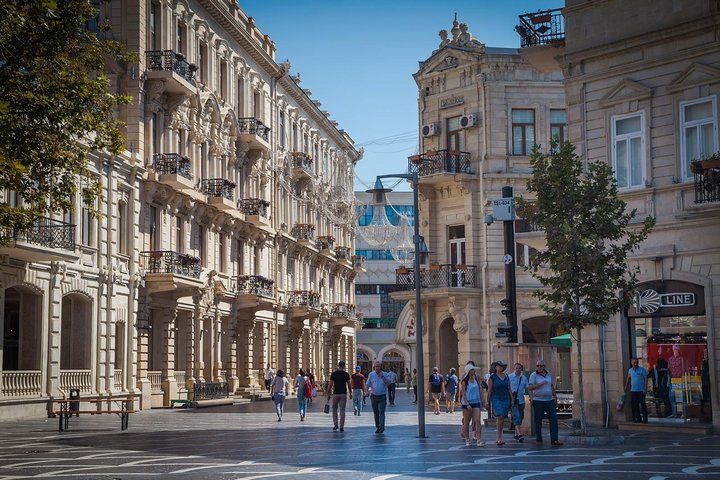
Baku hits first with Caspian salt on your lips and the tang of sumac curling from kebab stands along the Bulvar. Neon Flame Towers pulse above Icheri Sheher's honey stone at dusk. Fountains Square blasts Arctic air from Gucci and Zara onto cobblestones older than Moscow. The city spent its oil boom laying out Parisian avenues; Nizami Street's belle époque facades could fool Vienna.
Then it threaded Wi-Fi through 15th-century caravanserais where silk once bought saffron. You will fork out 3 manat ($1.75) for gutab sizzled on a saj behind Taza Bazaar in a Soviet tea house. Later, 40 manat ($23.50) buys cocktails in a rooftop bar that feels like Dubai took a wrong turn onto the Absheron Peninsula. The contradiction holds because Baku refuses to apologize.
Two-meter-thick walls still circle the old city. Fiber optic runs inside them. The metro costs 30 gapik (18¢) and keeps Swiss timing. Yet the escalator voice keeps that warm Soviet baritone. Summer winds have a name: Khazri. Winter heaters smell of kerosene and childhood. Come for mud volcanoes and stone palaces. Stay once you realize nowhere else juggles opposites this smoothly.
Travel Tips
Transportation: Make the Baku Metro your daily workhorse. One token, 30 gapik (18¢), opens chandeliered stations that feel like underground palaces. Download Bolt before wheels touch the runway. Airport taxis quote 50 manat ($29); Bolt averages 12 manat ($7) to the center. Smart move: ride the AeroExpress to 28 May station for 2 manat ($1.18), then switch to the metro. Buses run fine, but Cyrillic-only signs turn every ride into a puzzle. Stick to the metro for speed.
Money: The manat (AZN) trades at roughly 1.7 to the dollar. Prices sometimes show in 'old manat'; just divide by 10,000. Cards swipe easily in malls and upscale restaurants. Carry cash for tea houses and bazaars. ATMs from Bank Respublika or Kapital give the best rates. Skip the airport exchange booths. Tipping 10% is welcomed, not required. Locals usually round up and leave it at that.
Cultural Respect: Friday prayers ring out from the Palace of the Shirvanshahs. Baku remains secular. Shorts are fine everywhere except inside mosques. Shoes come off when entering homes. Your host may insist it is unnecessary. Do it anyway. Tea culture runs deep. Refusing tea can read as rude. In the Old City bazaar, open with 50% of the asking price. Settle near 70%. Solo women may draw curious glances. Yet harassment stays rare.
Food Safety: Street kebabs along Nizami Street are safer than they appear. Look for high turnover and sizzling grills. Skip lettuce at budget joints unless you see bottled water used for washing. Taza Bazaar sells pasteurized pomegranate juice for 2 manat ($1.18). Worth every sip. Tap water is technically drinkable but tastes of chlorine. Stick to bottles. Follow the construction crews to locate the best gutab. If locals earning $15 a day eat there, you can trust it.
When to Visit
April and October hit the sweet spot. Daytime temperatures linger around 20-22°C (68-72°F). Khazri winds ease. Hotel prices drop 30-40% from summer highs. May delivers the Baku Jazz Festival and beach weather at Bilgəh. The sand is imported. Who cares at 25°C/77°F? June through August turns brutal. Expect 35°C/95°F plus 80% humidity.
Hotels spike 60-80%. Locals who can, bolt for the mountains. September still reaches 28°C/82°F. Crowds thin. Pomegranates ripen. November through March turns cold, wet, and windy. Temperatures hover between 5-12°C/41-54°F. You will own the Old City's cobblestones. Tea houses feel cozier. January brings Novruz celebrations.
Fire-jumping. Special pastries. Flights from Istanbul fall 25% in winter. Hotels cut rates by half. Skiing at Shahdag runs December through March. The drive takes two hours. Beach clubs reopen mid-May. By July they charge 20 manat ($12) for a sunbed. Ramadan quiets nightlife. Daytime carpet deals in the Old City bazaar improve.
Frequently Asked Questions
How Many Days Do You Need in Baku?
Three to four days gives you enough time to cover the Old City (Icherisheher), the Flame Towers area, and the Caspian Boulevard waterfront without feeling rushed. If you want to add day trips to Gobustan's mud volcanoes or the fire temple at Ateshgah, plan for five days. The compact city center means you can see the main sights in two days, but you'd miss the slower-paced neighborhoods like Fountains Square and the chance to try different plov restaurants.
What's the Best Time of Year to Visit Baku?
Late April through early June and September through October offer the most comfortable weather, mild temperatures around 18-24°C and less wind than winter. July and August can hit 35°C with strong sun, though the Caspian breeze helps. Winter (December-February) is cold and windy, along the boulevard. But hotel rates drop by 30-40% and you'll avoid the summer crowds at Maiden Tower and the Carpet Museum.
Is Baku Expensive for Tourists?
Baku is moderately priced compared to European capitals, expect to spend $50-80 per day for mid-range travel including meals, metro rides, and museum entries. A sit-down meal at a local restaurant like Firuze or Dolma runs 15-25 AZN ($9-15), while street food like qutab costs 2-4 AZN. Taxis through the Bolt app are cheap (5-10 AZN for most in-city trips), and museum tickets rarely exceed 10 AZN. Luxury hotels near the Flame Towers can reach $200+/night, but clean guesthouses in Nizami Street area start around $35.
Do I Need a Visa to Visit Baku?
Most travelers can get a 30-day e-visa online for $20 through evisa.gov.az, processed in 3-5 business days. Citizens of Turkey, Georgia, and several other countries get visa-free entry. If you're flying through Heydar Aliyev International and staying less than 96 hours, some nationalities qualify for a free transit visa. But check current eligibility before booking since rules change.
Is It Safe to Walk Around Baku at Night?
Central areas like Nizami Street, Fountains Square, and the Caspian Boulevard are well-lit and busy until late, with visible police presence and families out until 11 PM. Petty crime is rare, though watch your bag in crowded metro stations during rush hour. The Old City's narrow alleys are safe but poorly lit, stick to the main lanes like Kichik Qala if you're there after dark. Avoid unlit side streets in outer residential districts if you're unfamiliar with the area.
What's the Easiest Way to Get from the Airport to the City Center?
The airport bus (line 116) runs every 30-40 minutes to 28 May metro station for 1.50 AZN and takes about 50 minutes depending on traffic. A taxi through Bolt or Uber costs 15-20 AZN ($9-12) and gets you to Fountains Square or Old City in 25-35 minutes. Avoid unmarked taxis at arrivals, they'll quote 40-50 AZN for the same ride. If you arrive late (after midnight), app-based taxis are still reliable and running.
Can You Drink Tap Water in Baku?
Locals generally don't drink tap water, and neither should you, stick to bottled water, which costs 0.50-1 AZN at any convenience store. Some newer hotels claim their filtered systems are safe. But most travelers report no issues avoiding tap water entirely. Restaurants serve bottled water by default. Ice in drinks at established cafes and restaurants is typically made from filtered water. But ask if you're concerned.
How Do You Get Around Baku Without a Car?
The metro is fast, clean, and covers most tourist areas, buy a BakıKart (reloadable card) for 2 AZN at any station and top it up with 0.30 AZN per ride. Bolt taxis are cheap and abundant throughout the city, rarely costing more than 10 AZN for trips within central Baku. The Caspian Boulevard is good for walking or renting a bike (free city bikes available with the IDBilet app). Buses exist but routes are confusing for visitors. Stick to metro and taxis unless you read Cyrillic.
What Should I Wear in Baku as a Tourist?
Baku is secular and you'll see everything from headscarves to summer dresses. But dress modestly when visiting mosques (covered shoulders and knees, women should carry a scarf). Casual smart clothing works for most restaurants. Only high-end spots like Chinar or Sky Grill require dressy attire. Comfortable walking shoes are essential, Old City streets are cobblestone and uneven. In summer, bring a light layer for overly air-conditioned malls and museums.
What's the Deal with Baku's Mud Volcanoes?
Gobustan, about 65 km southwest of Baku, has clusters of bubbling mud volcanoes that look like miniature gray moonscapes, some are just a meter wide, others span 10 meters. You can visit as a half-day trip (hire a driver for 60-80 AZN round-trip or join a group tour for 30-40 AZN per person). The mud is cool to touch and non-toxic, and locals will tell you it's good for your skin, though there are no facilities to wash up. Combine it with Gobustan's ancient rock carvings, just 15 minutes away.
Are Credit Cards Widely Accepted in Baku?
Hotels, mid-range and upscale restaurants, malls, and chain stores take Visa and Mastercard without issue. Smaller cafes, street vendors, and neighborhood shops are cash-only, keep 20-50 AZN in small bills on hand. ATMs are everywhere in central Baku (look for Kapital Bank or ABB), and most accept foreign cards with reasonable fees (check your bank's international rates). Contactless payment works in many newer establishments and on the metro with BakıKart.
What's One Thing Tourists Always Miss in Baku?
Most visitors skip the Martyrs' Lane memorial and viewing platform on the hill above the Flame Towers, which offers the best panoramic view of the entire bay and city, dramatic at sunset. It's free, rarely crowded, and a short taxi ride from the center (5-7 AZN). Another overlooked spot is the Taza Bazaar, a large local produce market where you'll find dried fruits, fresh pomegranates, and spice stalls far more authentic than anything in tourist zones.
More Ways to Experience Baku
Tours, day trips, and local experiences curated by on-the-ground operators.
Didn't see anything interesting yet?
Browse Viator's full catalog of tours, day trips, food experiences, and private guides in Baku.
See All Baku Tours on Viator